
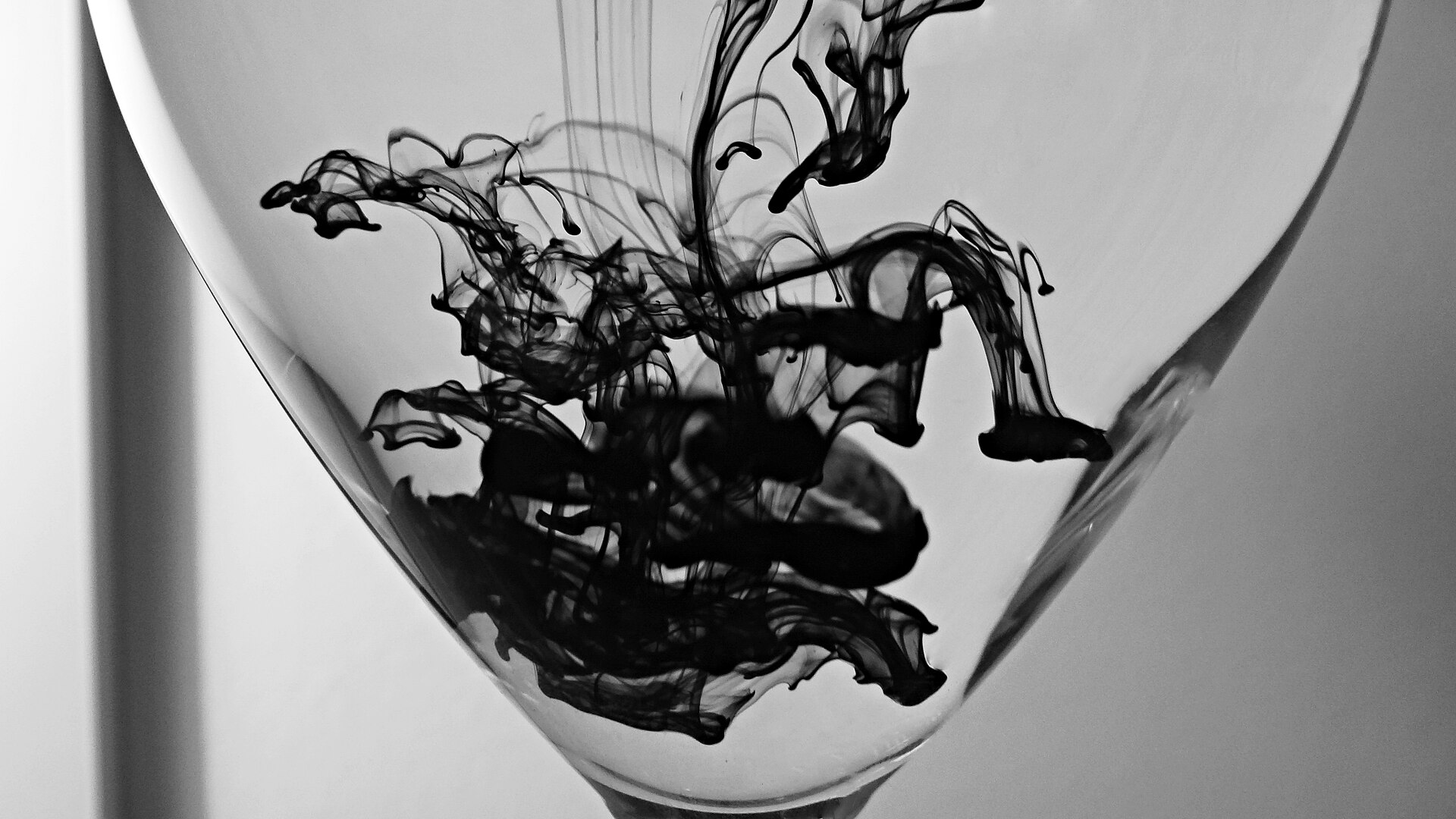
Drop a bit of black ink into a glass of still water and leave it alone. Nobody stirs, nothing heats it, yet within a few hours the whole glass is gray. That small experiment answers a common biology question: is diffusion active or passive? It’s passive. The spreading happens without any cell, pump or battery paying for it.
What passive really means here
In biology, the words active and passive describe who supplies the energy. Active transport needs the cell to spend some, usually from a molecule called ATP. Passive transport doesn’t. The particles move because they already have energy of their own.
Every molecule in a liquid or gas is jiggling about, bumping into its neighbors thousands of millions of times a second. Each one wanders at random. No ink particle knows where the clear water is. But if one corner is packed and another is empty, more particles will happen to leave the crowded corner than return to it. The result is a steady drift from high concentration to low.
That difference between the two sides is called the concentration gradient. People describe diffusion as moving “down” the gradient, the way a ball rolls downhill.
Where you see it every day
Someone peels an orange at one end of a bus, and you smell it at the other. Air currents help, but diffusion is doing some of the work. A tea bag left in a mug colors the water even if you forget to stir.
Your lungs rely on it with every breath. The air in the tiny sacs of the lung has more oxygen than the blood flowing past, so oxygen crosses into the blood. Carbon dioxide is more concentrated in that blood, so it goes the other way. Your chest muscles use energy to pull the air in, but the swap across the thin wall is free.
Simple and facilitated diffusion
Small, uncharged molecules such as oxygen can slip straight through a cell membrane. This is simple diffusion. Glucose is too big and too water-loving for that, and charged ions like sodium can’t pass through the oily middle layer either.
They use protein channels or carriers built into the membrane. It’s called facilitated diffusion, and it trips up a lot of students because a protein is involved. It’s still passive. The protein acts like a door, not a pump, and the particles still travel from high to low.
Osmosis belongs in the same family. It’s the movement of water across a membrane that lets water through but blocks some of what’s dissolved in it.
How active transport differs
The sodium-potassium pump is the textbook case. It pushes three sodium ions out of the cell and brings two potassium ions in, both against their gradients, and it burns one ATP each time. Stop the energy supply and the pump stops.
Here’s a quick test for exam questions. Look at the direction first. If the substance is going from low to high, it’s active. If it’s going from high to low, you’re almost certainly looking at diffusion, even when a protein is mentioned.
What makes it faster
Warmth speeds diffusion up, since hotter particles move quicker. That’s why tea brews badly in cold water. A steeper gradient helps, and so does a larger surface. Distance matters most of all: diffusion is quick across a membrane and painfully slow across a room. It’s one reason that large animals need a heart and blood vessels rather than waiting for oxygen to wander in.
Does it ever stop?
Not quite. Once the concentration evens out, the particles keep moving, but as many go one way as the other. That’s equilibrium, and the net movement is zero. If you like having pairs of ideas like this set side by side, compairro.com has more of them in plain language.
For your notes, one line will do: diffusion is passive, runs from high to low, and uses no ATP.
