
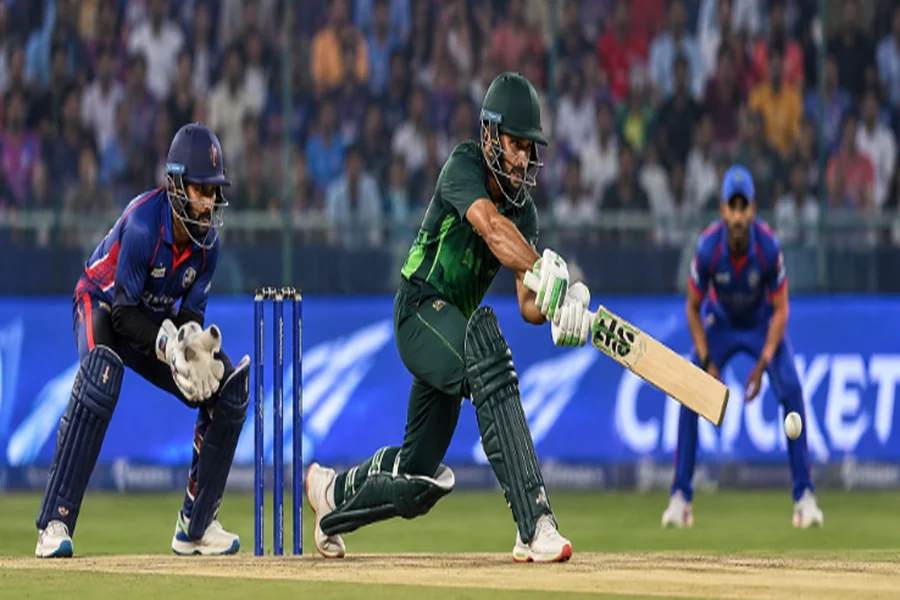
In T20 cricket, the first six overs work differently from the rest of the innings. Only two fielders may stand outside the 30-yard circle, giving opening batters more space while they still face the newest ball and freshest bowlers.
That phase is the powerplay, and it is priced separately in many cricket markets. On a cricket betting game page, options can include powerplay runs, wickets, batter runs or races to a set score alongside match winner.
Match winner asks for a view across 20 overs, two innings, possible dew, middle-over rebuilding and death bowling. A powerplay market narrows the question to six overs, the openers and the new-ball attack.
Tip 1: T20 and ODI Powerplays Are Different
In a full T20 innings, the mandatory powerplay covers overs 1–6. From the seventh over, the fielding side can normally place five fielders outside the circle.
ODIs use another structure: the first 10 overs form the opening powerplay, overs 11–40 allow four fielders outside, and the final 10 overs allow five.
Rain can shorten both formats. In a reduced T20, the powerplay is recalculated with the innings length. An eight-over T20 should not be treated like a standard six-over block.
Tip 2: A Fast Start Does Not Predict the Match
A team can reach 58 for 0 after six overs and still lose.
A strong powerplay can be followed by a middle-order slowdown, wickets against spin or weak death-over batting.
A favourite at 1.45 may lose two wickets in three balls and still remain favourite because of batting depth or the opponent’s weak death bowling. The full-match price can remain stable while the powerplay market has already settled.
Powerplay markets therefore suit a narrower opinion: these two openers against these two new-ball bowlers on this surface.
Tip 3: The Main Powerplay Markets
| Market | What it measures |
| Team powerplay runs | Total runs in overs 1–6 |
| Most powerplay runs | Which team scores more in its opening six |
| Race to 30 / 40 | Which side reaches the target first |
| Powerplay wicket | Whether a wicket falls in the first six |
| Batter powerplay runs | One opener’s score during the powerplay |
In T20, powerplay totals often sit from the high 40s to low 60s.
Recent IPL seasons have pushed the league-wide average toward 60 runs, or roughly 10 an over, with the phase contributing close to 30% of the innings total.
That does not make 55.5 a universal line. A slow outfield, difficult pitch or swinging new ball can still produce 38 runs.
Tip 4: Ground and Boundary Size Matter
A 42-metre square boundary creates a different powerplay from a 70-metre one.
Recent matches at the same venue can be more useful than a broad league average. The last three powerplays may show new-ball movement, fast scoring or a slow outfield.
If the league average is near 60 but the venue keeps producing low-40s powerplays, the ground deserves more weight.
Still, three recent matches are not enough on their own. Pitch preparation, weather and the current XI can all change the baseline.
Tip 5: Openers and New-Ball Bowlers Form One Matchup
Powerplay scoring is not only about batting strength.
Two specialist opening bowlers with strong early-wicket records can lower the expected total even against aggressive openers. If an injury forces a part-time bowler to take the new ball, the matchup changes again.
The same caution applies to batting form. Two attacking openers differ from a technician paired with a slower starter, but three recent innings are not a career sample.
The useful matchup is four players: two openers and two likely new-ball bowlers.
Tip 6: Toss and Dew Change the Approach
A side batting first on a fresh surface may spend the opening three overs building before accelerating.
A team chasing 190 under lights has a different problem and may attack earlier.
The important question is whether the posted line reflects the batting order, target, pitch and evening conditions.
On a standard T20 surface, 55-plus with 0–1 wicket is a strong opening phase. Under 40 with two wickets down creates a very different innings shape.
Tip 7: Match Winner Can Hide the Real Opinion
A short match-winner price may be based on middle-order depth, spin options or death bowling. Those advantages may have little impact in the first six overs.
If the only strong view concerns the opening pair and new-ball attack, the powerplay market isolates that idea more cleanly.
The reverse also applies. If pitch, batting depth and death bowling all point the same way, the full-match market may use more of the available information.
There is one extra 2026–27 live-betting wrinkle. Cricket Australia said on 31 August that a BBL team exhausting its over-rate timer must complete the rest of the innings with powerplay field settings and only two fielders outside the circle.
That does not change the opening six overs, but it can affect later live totals.
A Short Powerplay Check
Before comparing powerplay markets with match winner, confirm five things:
- Format: first 6 overs in T20 or 10 in ODI.
- Posted line: compare it with recent venue powerplays.
- Opening bowlers: identify the new-ball pair.
- Openers: check batting style, not only team reputation.
- Conditions: include toss, pitch, target and possible dew.
Powerplay markets work because they isolate one phase of the innings. When the analysis is really about the first six overs, the market can be just as narrow as the opinion behind it.
